

The South African Confederation project of the 1870s is largely unknown despite its enormous significance for understanding colonial attitudes towards black firearm ownership. It revealed racist and paternalist thinking by officials, and also what they just saw as a threat to European colonial power in the region. It would also reveal the strong symbolism and meaning that owning a firearm had for black individuals and tribes in colonial South Africa. In this article, Jonathan takes us through the political meaning and shenanigans of this time.
Not many people are aware that modern day South Africa’s borders and political trajectory very nearly took a different form. At first, there were tentative options for a union between the Cape and Orange Free State from the 1850s already, but these were never pursued to any conclusion. The second chance came in the mid-1870s as part of a grand vision for a union of the Cape, Natal, OFS, and ZAR. Unfortunately for the planners and visionaries, it would end up in a spectacular ball of fire and failure. Central driving themes to the Confederation plans were a uniform native policy, and a uniform firearm policy.
The approach of the various colonial territories
The four mentioned territories of colonial South Africa each had a different way of dealing with their local black tribes in terms of a native policy. The Cape was very liberal and blacks had the same nominal rights as any other inhabitant, subject to a few caveats here and there. There was no caveat for the purposes of firearm ownership: as long as they lived within the frontiers of the Cape, black people had the exact same firearm rights and perks as white Europeans.
Natal did not have much of an institution of native policy, and instead vested all of its powers in a ‘Great Chief’: Sir Theophilus Shepstone. Shepstone was fluent in isiZulu and understood local tribal cultures very well. He effectively governed and ruled over the black tribes in Natal through a form of ‘benevolent despotism’ and was well respected. Firearm ownership for blacks was very restricted, and only the chiefs had any real right to own firearms. It is much more accurate to describe it as a ‘privilege’ by virtue of their special status in society.
The Boer territories of the OFS and ZAR were very interesting contrasts of each other and the British colonies. The OFS had such a small black population that it did not even need a native policy, and its biggest ‘problem’ in this regard were the Sotho who it defeated in some very bruising wars in the 1860s. The ZAR was something else entirely: a mess (like most other things were for this country).
The ZAR had a fairly sizeable black population and it knew that it needed to make some kind of policy for them, but execution was very poor. It started to make plans for native reservations and made good progress in the early stages, but this did not last. With no meaningful provision for the ZAR’s black tribes, they were settled on land only with no security of tenure, and the government and Boer farmers could evict them whenever they wanted to. The ZAR government was also very weak and struggled to hold itself and its territory together. Boer farmers would encroach on designated tribal lands (including the Zulu Kingdom which was not even part of the ZAR), and also on protected Christian missionary lands. Its own approach to limiting black firearm possession was haphazard at best and largely a statement of intent that it seldom enforced.
The early stages for Confederation designs
To create any kind of union or confederation that made sense, the confederation planners decided that there needed to be agreement between all four colonial territories to treat black people and firearms the same way. The Cape was the biggest obstacle because of its liberal government led by liberals such as Molteno and Merriman. Together with other political allies such as Sir Southey from Griqualand West and Sir Barkley, they resisted against more firearm regulation and controls. They generally worried that too much restrictive laws would push the firearm trade underground and encourage illegal trading.
The white missionaries and other liberals in the Cape even showed general opposition to the Cape being given Responsible Government in previous, largely because they feared that frontier colonists possessed ‘myopic perspectives’ and could gain political power and dominate black tribes. Unfortunately for them, the Cape was given Responsible Government in 1871.
Firearms were not a contentious topic to most Cape residents, but it was to the colonists living on the Eastern Frontier that bordered onto areas inhabited by the Xhosa. The Cape Frontier Wars were many, highly destructive, and very traumatising for the frontier colonists and Xhosa. Much like modern day South Africa, there were individuals who believed that firearms ‘caused Xhosa rebellion’ because ‘it put silly ideas into black minds’ and emboldened them to rebel against the government. The result was that firearm started to become a political target.
Western colonists generally opposed laws that restricted firearms to themselves and blacks, and the eastern colonists resented them for this. It caused tensions and political division in the Cape legislature. Molteno’s government tried to respond by issuing a circular/directive to magistrates in 1974 to only issue firearm permits to ‘fit and proper people’, but it did not provide an exact definition of what such a person should be. This was not enough to satisfy the eastern colonists and Gordon Sprigg rose up as a political representative for the eastern districts, and began to acquire more political power and push for more gun control.
Around this time, the conservative government in London sent sir Bartle Frere to the Cape to make confederation happen. Frere organised a conference in London and invited the Cape, Natal, OFS, and ZAR to attend and discuss how to make confederation happen. Unfortunately, this conference failed spectacularly. Molteno (representing the Cape) felt offended that London was forcing the issue of confederation and simply refused to attend. Brand (from the OFS) attended, but his volkksraad in Bloemfontein prohibited him from discussing confederation. The ZAR attended but misunderstood the purpose of the conference, and saw it as plans for an OFS and ZAR union with a defensive alliance with the Cape and Natal. Only Natal (represented by Shepstone) was fully represented.
Even though the conference failed, it helped Frere formulate a plan to make confederation happen. First, he had to somehow get rid of the obstinately independent Molteno and his henchmen such as Merriman. Second, the Zulu had to be destroyed as the last truly great and united black tribe in South Africa. Third, the ZAR was far too unstable to be a reliable partner and needed to either be coaxed or coerced into being annexed.
The dominoes start to fall
Frere got his chance to get rid of Molteno quite soon thereafter when the 1875 Cape Frontier War broke out. The Xhosa made very good early gains in their rebellion, and Frere saw the reason for this being the fault of Molteno who wanted the colonial forces to be under his command rather than Frere’s (who commanded imperial troops). Molteno and Merriman’s logistical blunders on the battlefield was enough for Frere to unilaterally remove Molteno and dissolve his government, and Sprigg was selected to replace him. Sprigg gave Frere all the support he could manage.
The Xhosa had always lacked the ability to prosecute a war beyond the initial stages where they had the element of surprise, and the centralisation of military power in Frere’s command made crushing their disparate forces quite easy. With the Xhosa firmly defeated in the 1875 war, the Cape government decided to remove the reason for their rebellion altogether: the Xhosa were officially and thoroughly deprived of their land and driven further east. This had happened before in previous wars, but they had always been allowed to return. Not anymore. The land was then allocated and sold to settler colonists who would cultivate the land through organised and modern agriculture to the benefit of the colonial economy.
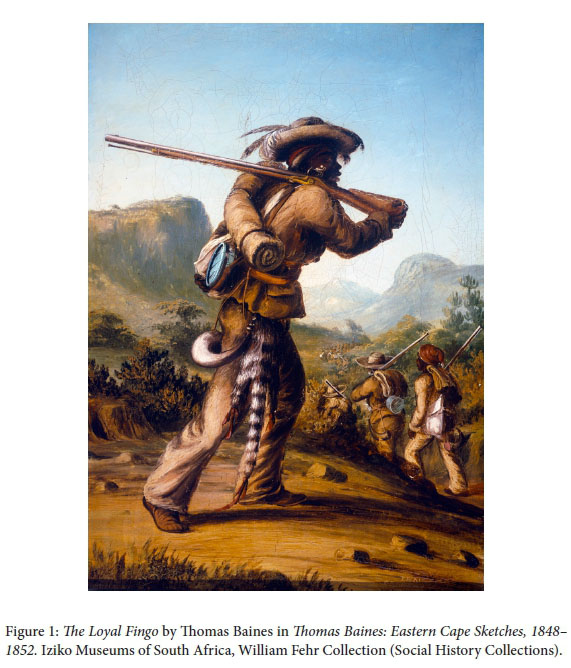
Having totally crushed the spirit of rebellion, Sprigg took his next step: making sure that it stayed crushed. The Cape government passed the Gunpowder Amendment Act 13 of 1877 that tightened up the issue of gunpowder permits by prohibiting such permits for any black living beyond the colonial frontier. Having reduced the legal supply of gunpowder, the next logical step was to reduce the possession of firearms. This logical step was to pass the Peace Preservation Act 13 of 1878 to completely and totally disarm all blacks in and around the Cape colony. Even ardently loyal black groups such as the Mfengu were targeted. Officially, the law was neutral about skin colour, but in reality it was only applied to blacks.
Even during the land dispossession after the 1875 war, the Cape parliament was torn about driving the Xhosa off the land for good. The parliament records shows representatives who clearly acknowledged the passion for the eastern lands, but felt that they had no choice. The 1877 law riled up politicians and liberal colonists alike who disliked the discrimination intent and also making their lives more difficult. The 1878 law was highly controversial and roundly criticised for the racist law that it was. When asked about his feelings towards the new disarmament policy, an Mfengu soldier replied:
“If the British soldier has a good rifle, then we must also have them!”
Basutoland was officially subject to London and not Cape Town, but Cape Town was responsible for administering Basutoland. As a result, the Sotho were initially spared being disarmed, but this could not last. The Sotho were black, and Sprigg believed that firearms ‘put silly ideas in the black mind, making them do things they later regretted’. This would lead to one of the most disastrous wars in British history. Around the same time that Sprigg and Frere were targeting Basutoland, two things happened: the Anglo-Zulu War of 1879, and the First Anglo-Boer War of 1880.
The Anglo-Zulu War is largely described as having been engineered by Frere who needed an excuse to destroy the Zulu as one of the last bastions of black political power (his second obstacle to successful confederation). The war started off very badly for the British with the military disaster at the Battle of Isandlwana, only slightly moderated by the overwhelming Zulu defeat at the Battle of Rorke’s Drift immediately afterwards. Frere’s reputation was severely damaged and imperial attitude started to sour on a South African confederation: the wars with the black tribes were too many, too costly, and irritating. An imperial decision was starting to take shape as ‘either let the blacks groups rule themselves, or do not trust them at all’. People such as Sprigg and Frere preferred the latter.
The ZAR Boers had been annexed in 1876 already when Shepstone ‘enquired’ into the ZAR’s affairs and decided that it was so financially bankrupt, politically unstable, and so extremely weak, that it had to be annexed. The annexation was motivated on ‘protecting it from the Zulu’ and probably unnecessary, but initially welcomed by the ZAR Boers who appreciated the stability it brought to the bankrupt country. Unfortunately, the British administrators alienated the ZAR Boers who began to grow resentful. When the British officials did not listen to them, Paul Kruger led an uprising and Boer victory in the First Anglo Boer War.
Even though the British defeated the Zulu in the end, the double whammy embarrassing defeat at Isandlwana and in the Anglo Boer War severely tarnished Frere’s reputation even further. Not only was London now getting sick and tired of South Africa, but the conservatives lost an election and the liberals once again were in power. Unfortunately, the new liberal government in London was not fully aware of the South Africa situation and left it to make its own decisions. While Frere was trying to justify his continued existence to London, the situation in Basutoland exploded into the BaSotho War of the Gun of 1880-1881.
Conclusion
The Basutoland war will be the subject of another article in the future, but for now it should be reasonably clear what role gun control played in the colonial era. With the exception of the Cape (until 1877), all of South Africa was made very uncomfortable by the thought of black people with firearms. Unfortunately, the constant wars with the Xhosa tilted Cape political power to agree with the rest of South Africa by 1878. Confederation would ultimately fail, but not totally: while confederation did not outright happen in the 1870s, its precondition goals of a uniform native and firearm policy had taken shape organically. Blacks throughout South Africa were now generally viewed the same way. Even if they retained some political concessions in the Cape, it was clear this would not last.
There were no more great wars with the black tribes after 1879 with the crushing of the Xhosa, Zulu, and Bapedi (the Sotho is an exception). While it suggests that gun control worked by preventing more wars, it can be noted that these strict controls were enacted at a time that modern firearms (centre fire breech-loaders) had only just been invented. If a rebellious tribe still had any firearms after this period, it was mostly outdated and antiquated muzzle loaders. Coupled with the total eradication of black political power, there was no longer any point to rebel.
It is also clear that firearms were potent symbols of political power, for everyone. The ZAR Boers defeated the British at Majuba hill in the First Anglo Boer War with a few armed farmers, and many black groups loyal to the Cape government (such as the Mfengu and Sotho) ascribed a strong sense of freedom and self-responsibility to owning firearms. Firearms made them better hunters, and able to defend themselves and their tribe. To have a firearm was a tangible symbol of being a ‘modern man’, and a sign of being a citizen in some respect, whatever the government thought by the time Sprigg came around. The coming BaSotho War of the Gun would also reveal a deep sense of admiration and pride in black firearm ownership, similar to the tragedy of the Langalibalele Affair of 1873 (not mentioned above, but will be discussed in an article dedicated to it).